 slowmind
The Decision-Making Style Test
24 questions · about 4 minutes · in the SlowMind app
Some people order in seconds. Others read the menu twice, ask what everyone else is having, and still glance at the next table when the food arrives. Neither is doing it wrong. They are simply choosing in different ways, and most of us have never looked closely at our own.
The Decision-Making Style Test in SlowMind takes about four minutes. It maps how you really choose across six styles, and answers a question most people have wondered about at least once: are you a maximizer, always hunting for the best, or a satisficer, happy with good enough?
It is not a verdict on whether you decide well. It is a mirror for how you decide.
Six ways to make a choice
Nobody uses just one style. The test measures six, in plain words:
- Thinking it through. Gathering facts and writing down the pros and cons. Fewer surprises, and choices you can explain.
- Going with a feeling. Knowing what is right before you can say why. Quick, and it catches what a list can miss.
- Asking others. Wanting someone's view first, like the photo sent to a friend before you buy.
- Waiting until you have to. Leaving a choice open until a deadline makes it. Sometimes time brings the missing facts. Sometimes the prices go up.
- Deciding in the moment. Choosing fast, on the spot, and catching chances that close quickly.
- Looking for the best. Comparing widely, and often carrying on comparing after you have chosen.
The first five describe how you get to a choice. The sixth describes the bar you are aiming for. That split is the heart of the test.
Maximizer or satisficer?
A maximizer looks for the best possible option, and the comparing often keeps going after the choice is made. A satisficer decides in advance what good enough means, takes the first option that clears that bar, and moves on.
Satisficing, a blend of satisfy and suffice, is a word coined by the economist Herbert Simon in the 1950s. In 2002, the psychologist Barry Schwartz and colleagues described maximizing and satisficing as a tendency people carry across many kinds of choice. In their studies, people who leaned towards maximizing tended to report more regret and less satisfaction with life.
That does not make satisficing the right answer. A careful search does sometimes find a better option. A satisficer saves the hours, and pays with the better option they never went looking for. The useful question is not which one you should be, but whether your bar fits the choices you spend it on.
Where the six styles come from
Five of the styles echo a well-known framework from decision research. In 1995, Scott and Bruce described five general decision-making styles: rational, intuitive, dependent, avoidant and spontaneous. In plainer words, those become thinking it through, going with a feeling, asking others, waiting until you have to, and deciding in the moment. The sixth, looking for the best, is the maximizing tendency from Schwartz's work.
To be clear: the questions are SlowMind's own, written around everyday choices. The test does not use the published Scott and Bruce questionnaire or the Schwartz maximization scale, and it is not a validated research instrument. It borrows a useful map, then asks about your actual month.
The mix matters more than the winner
Many quizzes hand you a single label: planner, gut decider, people person. Real choosing is messier. What your styles do together tells you more than which one comes first.
Take two people who both think things through. One is also a strong maximizer: one more review always feels like the sensible next step, and on Sunday they are still reading about the lamp. The other is a satisficer: they set clear rules, take the first option that passes, and were done on Tuesday. Same lead style, very different weeks.
Other pairs have their own shape: waiting plus deciding in the moment often means a big choice sits for weeks, then gets made in a single afternoon. That is why the test shows your full breakdown across all six styles rather than one type.
Big choices and small choices
Almost everyone shifts style with the size of the choice, but the effort does not always match the stakes. A maximizer can spend an hour choosing a restaurant. A fast decider can pick a phone contract the way they pick lunch.
Seeing that gap is often more useful than changing your style. The aim is not to become a different kind of decider. It is to choose how much of yourself each choice deserves.
What the questions feel like
The questions are short statements about ordinary choices: menus, phones, trips, job offers, invitations. You rate how true each one is for you, picturing real choices from the past month. A typical one looks like this:
“I keep looking for a better phone even after I find one I like.” Strongly disagree, disagree, neutral, agree or strongly agree.
There are no right or wrong answers, only honest ones. Answer as the person you were last month, not the decider you wish you were.
What you get in SlowMind
The Decision-Making Style Test sits in the Values & Decisions section of SlowMind. When you finish, you receive:
- Your full breakdown across all six styles, as percentages, with your lead style and the style you barely use.
- A clear maximizer or satisficer answer, including the in-between: hunting for the best in a few areas and stopping at good enough everywhere else.
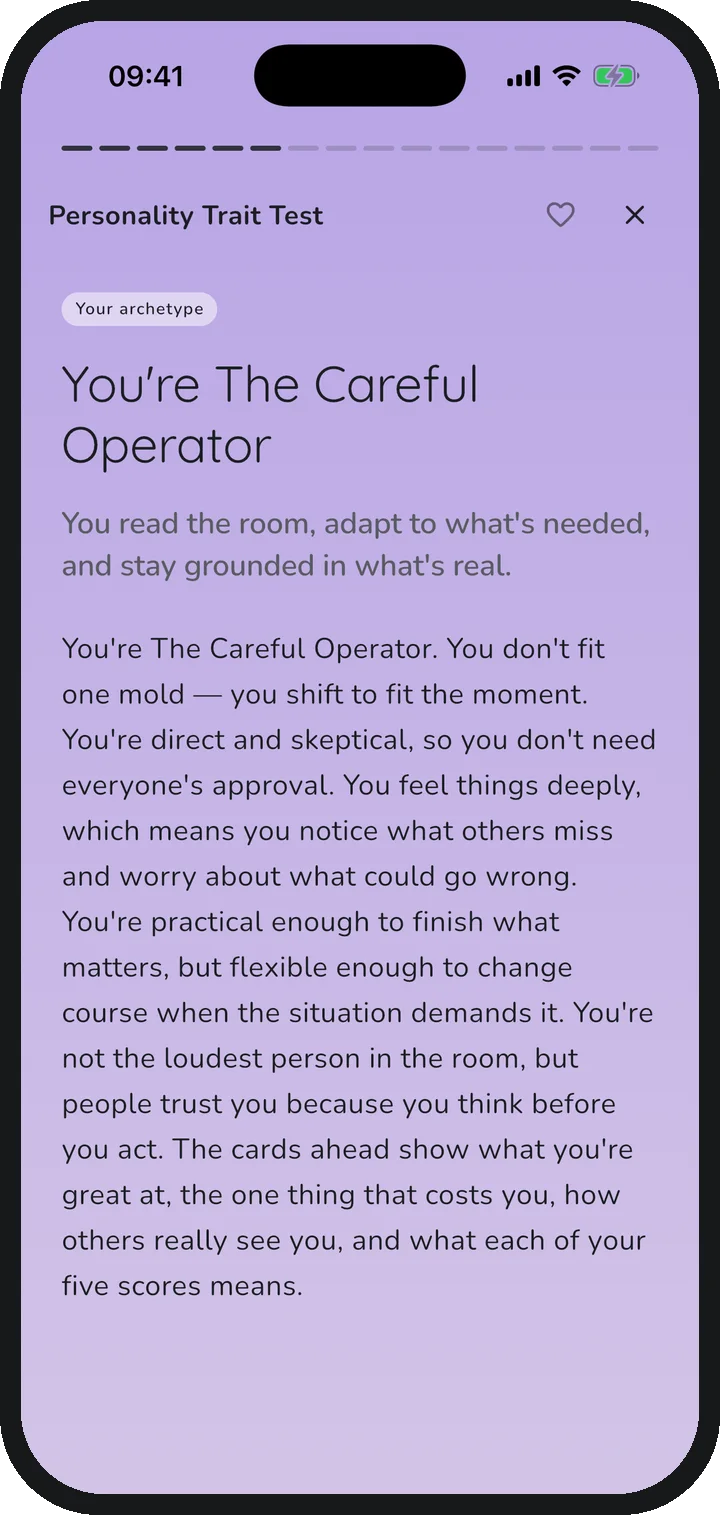
- A personal reading written by AI from your own answers, in plain words: how your styles mix, where your style saves you time and where it costs you, how it lands with the people around you, and one way to decide on purpose.
- Insight cards to keep and return to.
- Guided audio courses picked for your result, best fit first, from three courses of six short sessions each: Choose and Let Go, on knowing when to stop searching; Decide, Then Move, on what waiting really costs; and Gut, Then Check, on one short check before big choices.
The reading is generated from your own answers, not pulled from a stock paragraph, and it describes how you choose, never what you should choose.
Take the Decision-Making Style Test in SlowMind
Four unhurried minutes, and an honest look at how you actually choose.
Frequently asked questions
How long does the Decision-Making Style Test take?
It is 24 questions and most people finish in about four minutes. There is no timer, so you can take longer if a question deserves more thought.
Is it free?
The app is free to download, and your first test, the one chosen for you when you join, is free. Premium unlocks every test, full readings, and the audio library.
Is this therapy?
No. The Decision-Making Style Test is a tool for reflection. It is not therapy, diagnosis, or treatment, and it is not a substitute for professional support if you need it.
What is the difference between a maximizer and a satisficer?
A maximizer looks for the best possible option and often keeps comparing after choosing. A satisficer decides what good enough means, takes the first option that clears that bar, and moves on. Neither is better. Each one saves something and pays for something.
Is one decision-making style better than the others?
No. Each style gets something right that the others miss, and each has a cost. The test shows your mix so you can see where your way of choosing serves you and where it costs you.
Is this the Scott and Bruce decision-making style questionnaire?
No. Five of the six styles echo the framework Scott and Bruce described in 1995, and the sixth draws on Barry Schwartz's work on maximizing. The questions are SlowMind's own, and the test is a tool for reflection, not a validated research scale.